A failed delivery
One wasted trip, and a second one booked
- Nobody in to sign
- Crew slot wasted, redelivery booked
- Complaint calls, goodwill
AnyoneIn confirms before the van leaves, and rebooks anyone who can’t make it.
How deliveries workAnyoneIn is the AI agent that checks your customer will be in for any delivery that needs them: signed-for, age-checked, two-person, installs and collections. It asks by email, then text, then a natural phone call, and rebooks anyone who can’t make it.
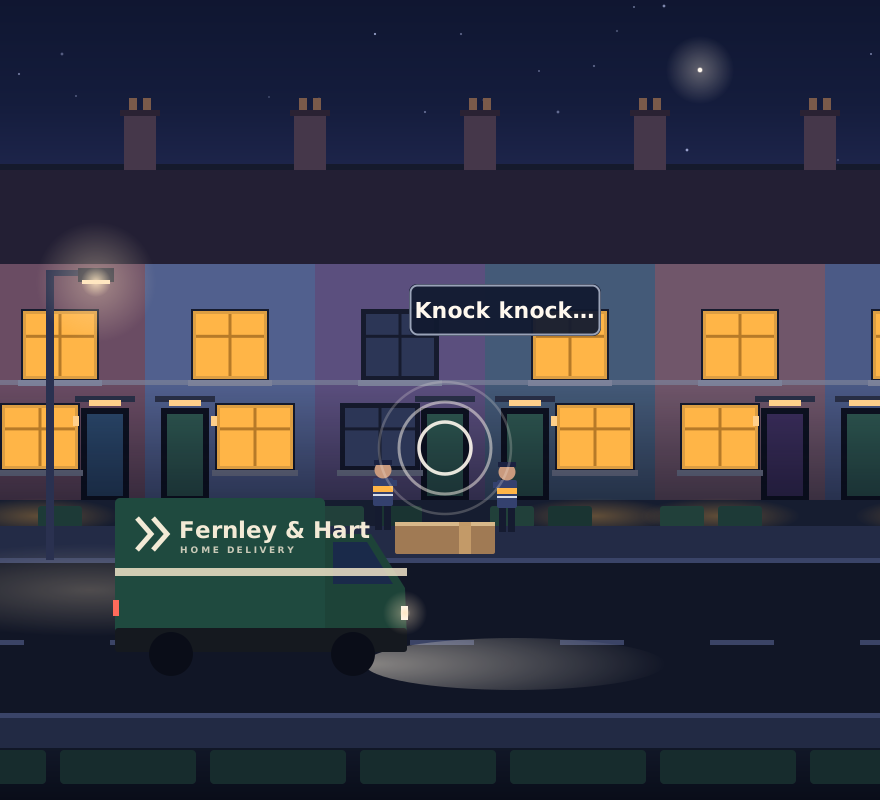
Tonight on this street: 9 confirmed·2 rebooked·0 wasted trips
IllustrativeIllustration: a street at dusk. As each customer confirms, their window lights up amber, and the van only stops at the lit houses.
One missed knock costs the trip, the phone calls, the apology, a second trip, and sometimes the order.
What one failed visit costs
Total≈£92
IllustrativePut in your own numbers
The customer isn’t home, or the item isn’t ready or boxed. The refund is delayed, the customer chases, and the returned stock loses value while it waits.
A failed delivery
AnyoneIn confirms before the van leaves, and rebooks anyone who can’t make it.
How deliveries workA failed collection
AnyoneIn checks someone’s home, the item’s ready and it’s the right item, for retailers and the carriers who collect.
How collections workMost teams handle this by calling customers the day before. It takes hours, and plenty of people don’t pick up calls from numbers they don’t recognise.
Illustrative Calling 40% of 4,800 jobs a month at 4 minutes each is 128 staff hours, before the voicemails and the call-backs.
And volumes keep growing: two-person delivery alone is up about 6.5% a year, against about 2% for wider retail.2
If the email gets no reply it sends a text, and if that goes unanswered it phones, always in sensible hours and on your brand. The call reaches the people who ignore texts, and it can rebook them there and then.
Three days before
A branded email with three one-tap buttons: I’ll be in, someone else will be in, I need a different day.
Typical reply: Taps “Yes, I’ll be in to sign”
Two days before, if there’s no reply
A short text. They reply in their own words, and the agent understands.
Typical reply: “At work but my partner Jo will sign”
The day before, if there’s still nothing
A natural phone call, in a British voice, that reaches the people who ignore texts. It confirms, rebooks or takes a name, and leaves a voicemail if a machine answers.
Typical reply: “Tuesday’s no good. Could you do Thursday?”
As soon as there’s an answer
A clear outcome and the next action, in the console and in a signed webhook to your systems.
Any reply pauses the plan. A clear answer closes it.
Sam can’t do Tuesday, so the agent offers the slots you allow and books Thursday morning. It checks it’s speaking to the right person first, and only mentions the first line of the address.
Hello, this is the AI delivery assistant for Harlow & Finch, calling about your delivery. Am I speaking with Sam?
Yes, that’s me.
Thanks, Sam. Your Aldgate three-seat sofa is booked for Tuesday, between 8am and midday. Will you be in to sign for it?
Ah, no. Tuesday’s no good, I’m away with work. Sorry, am I talking to a real person?
I’m an AI assistant, but I can sort this for you. I can do Thursday morning, 8 till 12, or Friday afternoon, 12 till 5.
Thursday morning would be perfect.
Lovely. That’s Thursday the 15th, between 8am and midday. Someone over 18 needs to be in to sign for it.
That’s fine. Same address, yeah?
Yes, the address on your order, on Elm Road. You’ll get a text confirming the new slot in a minute.
Brilliant, thanks.
Thanks, Sam. Thursday morning it is. Goodbye.
Someone else signing, Thursday instead of Tuesday, a question, a complaint or a STOP: the agent works out what each reply means, notes what your crew needs and takes the next step.
“Yes, I’ll be in all morning”
Will be in
“My flatmate Priya can sign for it”
Signing: Priya
“Not Tuesday, sorry. Thursday morning?”
Moved to Thu 8–12
“The last one arrived damaged, can someone call me?”
Next: call the customer back
“Please stop texting me”
No more messages, on any channel
Industry case studies report 42–67% fewer failed deliveries after retailers automated confirmation.3,4 Those figures are other companies’ own reports. Here’s what stopping half of the avoidable failures could mean for a furniture retailer with 4,000 deliveries and 800 collections a month.
IllustrativeOur default assumptions for a furniture retailer. Change any of them in the calculator.
122
failed visits avoided a month
194
customer-service hours back a month
10
crew days freed a month
See who’s confirmed, who’s rebooked and who needs a call, with the whole conversation behind each one. Tap the numbers to see what each part does.
Can’t do Tuesday, away with work. Moved to Thursday morning.
Tue 13 Oct, 8–12 → Thu 15 Oct, 8–12Move the booking on the carrierEmail sent to sam@example.com
No reply · text sent
AI call to Sam · 0:57
AI Your sofa’s booked for Tuesday, 8 till 12. Will you be in to sign?
Sam Tuesday’s no good, I’m away with work.
AI I can do Thursday morning, 8 till 12, or Friday afternoon.
Sam Thursday morning would be perfect.
Confirmed before dispatch, failed visits prevented, how fast people answer, and which channel did it.
Every delivery and collection, with its status and which steps have gone out. It updates as replies come in.
Email, then text, then call, each with a countdown. You can send the next step now, or stop.
One plain sentence for ops, the new slot or the signer’s name, and what to do next.
Every email, text and reply, plus the call transcript, in order.
Coming soon
They’ve just confirmed, and they’re thinking about the delivery. That’s when taking the old sofa away, assembly or a one-hour slot is an easy yes.
Only offered where your customers have agreed to hear from you.
How upsells will workTuesday’s no good. Thursday morning?
All set for Thursday, 8–12. Want us to take your old sofa away for £25?
Done, added to your order.
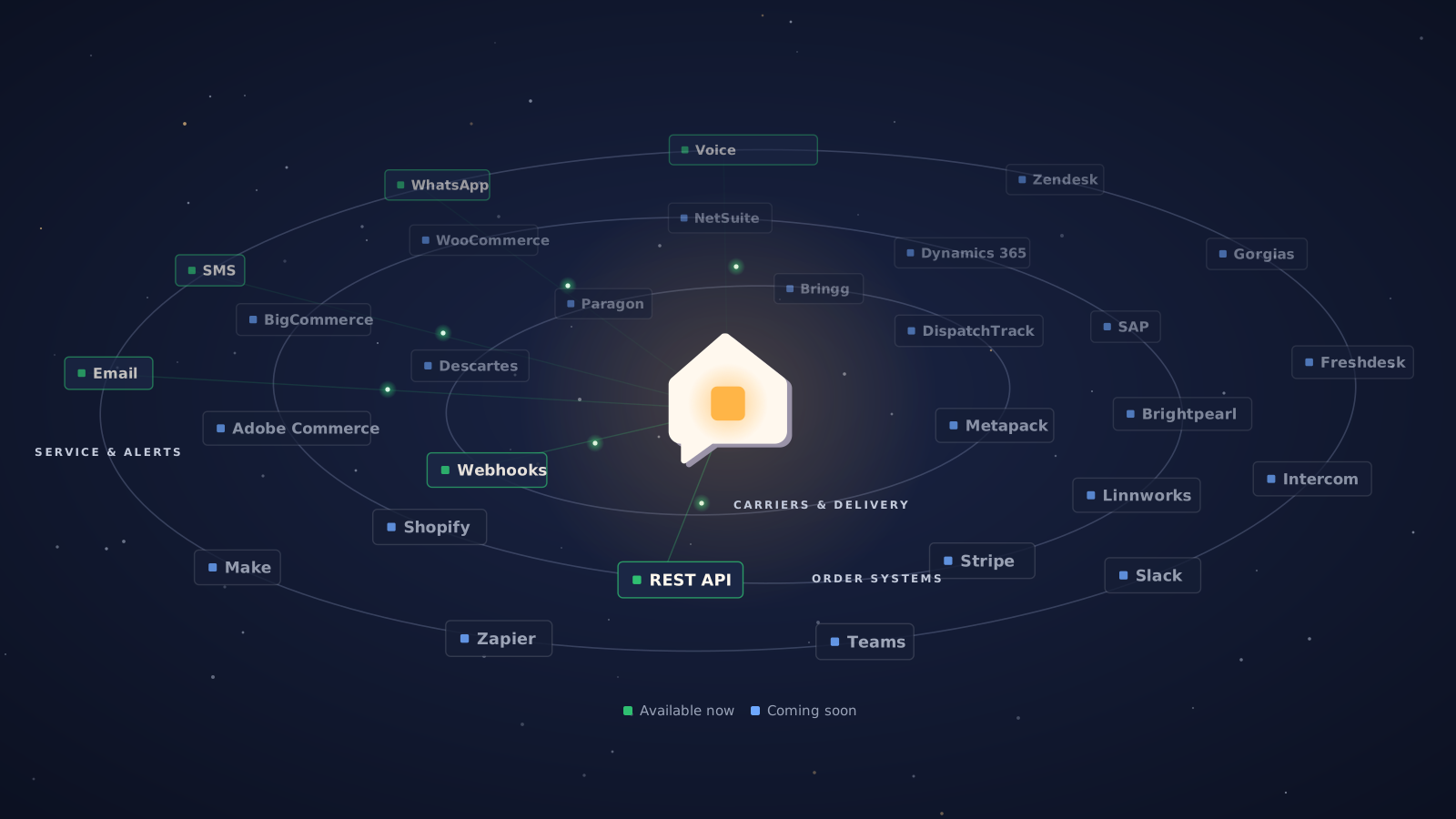
Keep your OMS, your carrier and your routing. AnyoneIn adds the one job they don’t do, which is finding out who’s in.
Send each order through the API and get the outcome back in a signed webhook. It works with any carrier, because it confirms before the job is handed over, and nothing in your stack needs replacing.
AvailableComing soon
The rules it follows on every message and call.
Every call says it’s your automated assistant. Ask if it’s a person and it says no.
Built in the UK and hosted in the UK or EU on Google Cloud. We process data for you, under a DPA.
Texts and calls only between 9am and 8pm, with STOP honoured on every channel. Built for UK rules: PECR and Ofcom’s guidance on calls.
Complaints, damage and “can I speak to someone?” go straight to your team.
We’re taking on a handful of UK retailers and carriers for a 60-day pilot, with a hold-out group so you can see the difference in your own numbers.
You get
We ask
Anything else? Ask us
Yes. Every call opens by saying it’s your automated assistant, and if a customer asks whether they’re talking to a person, it says it’s an AI and carries on helping. Emails and texts come from your brand, in your tone, and a person can always be reached.
The agent tells them your team will call back, marks the job “wants a person”, and shows the next action in the console and in a signed webhook to your systems. Complaints, damage and refunds always go to a person.
Any. AnyoneIn confirms with the customer before the job is handed to a crew, so it works from your order data through the API and webhooks, whoever delivers. Prebuilt connectors for delivery platforms are coming soon.
You pay per job rather than per message: one delivery or collection, however many emails, texts and calls it takes. Our prices are published and depend on the job: indicatively £0.90 to £1.50 for a two-person, install or collection job, and £0.30 to £0.50 for a signed-for or age-checked delivery. The pilot has no platform fee for 60 days. See pricing
The integration is one API call per order, and one webhook endpoint to receive the results. During a pilot we set up your brand, tone and the slots it can offer with you. Prebuilt connectors for order systems such as Shopify are coming soon.
Only what it takes to confirm: the customer’s name, mobile and email, the items, the date and window, the address, and the other slots it may offer. It’s hosted in the UK or EU on Google Cloud, and we act as your processor.
Sources and assumptions
Take a 60-day pilot with a hold-out group, and see the difference in your own numbers.